Whiskies That Speak Through the Cask: How Oak Shapes Scotch Whisky
Why does one Scotch whisky taste of vanilla, honey and coconut, while another offers raisins, dark chocolate and warming spice? A major part of the answer lies in the oak cask.
Understanding Scotch whisky cask types is one of the most useful ways to explore whisky flavour. Bourbon barrels, sherry-seasoned butts, port pipes and refill hogsheads can all influence a spirit differently.
But the cask isn’t everything. Fermentation, distillation, peat, the original character of the spirit and maturation conditions all contribute to the finished whisky.
In this guide, we’ll explain the main cask types, how oak influences flavour and eight whiskies that demonstrate different approaches to maturation.
Buying note: Prices, availability and bottling specifications can change. Check the current retailer listing before ordering.
Quick Guide: Scotch Whisky Cask Types
| Cask Type | Common Flavour Associations | Example Whisky |
|---|---|---|
| Ex-bourbon oak | Vanilla, honey, coconut, caramel | Deanston 12 Year Old |
| Sherry-seasoned oak | Dried fruit, nuts, spice, chocolate | Tamdhu 12 Year Old |
| Port cask finish | Red fruit, berry sweetness, spice | Glenmorangie Quinta Ruban 14 |
| Rum cask finish | Tropical fruit, vanilla, sweetness | Balvenie 14 Caribbean Cask |
| Sherry and peat combination | Smoke, dried fruit, spice | Kilchoman Sanaig |
| Multiple cask types | Layered fruit, oak and spice | GlenAllachie 12 Year Old |
| Sherry-led island maturation | Dried fruit, oak, gentle smoke | Highland Park St Magnus Edition 2 |
| Long maturation with varied cask influence | Developed oak, fruit, spice | Craigellachie 23 Year Old |
1. Deanston 12 Year Old – Exploring Bourbon-Cask Character
Deanston 12 Year Old is a useful starting point for understanding bourbon-cask-led Highland whisky.
Ex-bourbon American oak is commonly associated with vanilla, honey, caramel, coconut and gentle spice.
Deanston’s malty spirit character provides a good foundation for exploring these flavours without the heavier dried-fruit influence of a strongly sherried whisky.
What the Cask Contributes
- Vanilla and honeyed sweetness.
- Gentle oak spice.
- Caramel-like notes.
- Balance with the underlying malt character.
Flavour direction: Honey, vanilla, malt, fruit and oak.
Best for: Drinkers exploring ex-bourbon maturation.
Explore Deanston 12 Year Old →
2. Tamdhu 12 Year Old – The Influence of Sherry-Seasoned Oak
Tamdhu 12 Year Old provides a clear contrast with bourbon-cask-led Scotch.
Tamdhu is closely associated with maturation in sherry-seasoned oak casks. This approach brings a richer flavour direction with dried fruit, nuts, spice and oak.
Comparing Tamdhu 12 with Deanston 12 is a useful way to explore how maturation choices can affect whiskies of the same stated age.
What the Cask Contributes
- Dried-fruit character.
- Nutty and spicy notes.
- Richer oak influence.
- Fruitcake-like flavour associations.
Flavour direction: Raisins, citrus, spice, nuts and oak.
Best for: Understanding sherry-cask maturation.
3. Glenmorangie Quinta Ruban 14 – How Port Casks Change Whisky
Glenmorangie Quinta Ruban 14 Year Old demonstrates how a finishing cask can add a different layer of flavour.
Quinta Ruban begins its maturation in bourbon casks before spending additional time in port casks.
The port finish introduces richer fruit and chocolate-like characteristics alongside Glenmorangie’s underlying Highland spirit.
What the Cask Contributes
- Red-fruit character.
- Chocolate-like richness.
- Additional spice and sweetness.
- Contrast with the original bourbon-cask influence.
Flavour direction: Dark chocolate, orange, red fruit and spice.
Best for: Exploring port-cask finishing.
Explore Glenmorangie Quinta Ruban 14 →
4. Balvenie 14 Caribbean Cask – The Effect of Rum-Cask Finishing
Balvenie 14 Year Old Caribbean Cask offers an approachable example of rum-cask finishing.
The whisky is matured in traditional oak casks before finishing in casks that have held Caribbean rum.
This can contribute tropical fruit, vanilla and sweet spice while retaining Balvenie’s familiar honeyed malt character.
What the Cask Contributes
- Tropical-fruit associations.
- Vanilla and sweet spice.
- Additional richness.
- Contrast with conventional bourbon-cask maturation.
Flavour direction: Honey, vanilla, tropical fruit, toffee and spice.
Best for: Drinkers interested in unusual cask finishes.
Explore Balvenie 14 Caribbean Cask →
5. Kilchoman Sanaig – Sherry Casks Meet Peat Smoke
Kilchoman Sanaig shows how maturation can interact with a strongly flavoured spirit.
Kilchoman produces peated Islay whisky, and Sanaig has a substantial contribution from sherry casks.
Rather than replacing the peat character, the sherry influence complements it with dried fruit, spice and sweetness.
What the Cask Contributes
- Rich dried-fruit notes.
- Spice and oak.
- Sweetness alongside smoke.
- Contrast between cask and distillery character.
Flavour direction: Peat smoke, dried fruit, spice and coastal notes.
Best for: Exploring the interaction between peat and sherry casks.
6. GlenAllachie 12 Year Old – The Art of Combining Cask Types
GlenAllachie 12 Year Old is a useful example of whisky created using multiple cask influences.
Its maturation profile draws on different oak types, including sherry-associated casks.
The aim is to create a balanced flavour profile where fruit, honey, chocolate, oak and spice work together.
What the Casks Contribute
- Layered fruit character.
- Honey and chocolate notes.
- Spice and oak.
- Balance between different maturation influences.
Flavour direction: Honey, dried fruit, chocolate and spice.
Best for: Understanding multi-cask whisky composition.
Explore GlenAllachie 12 Year Old →
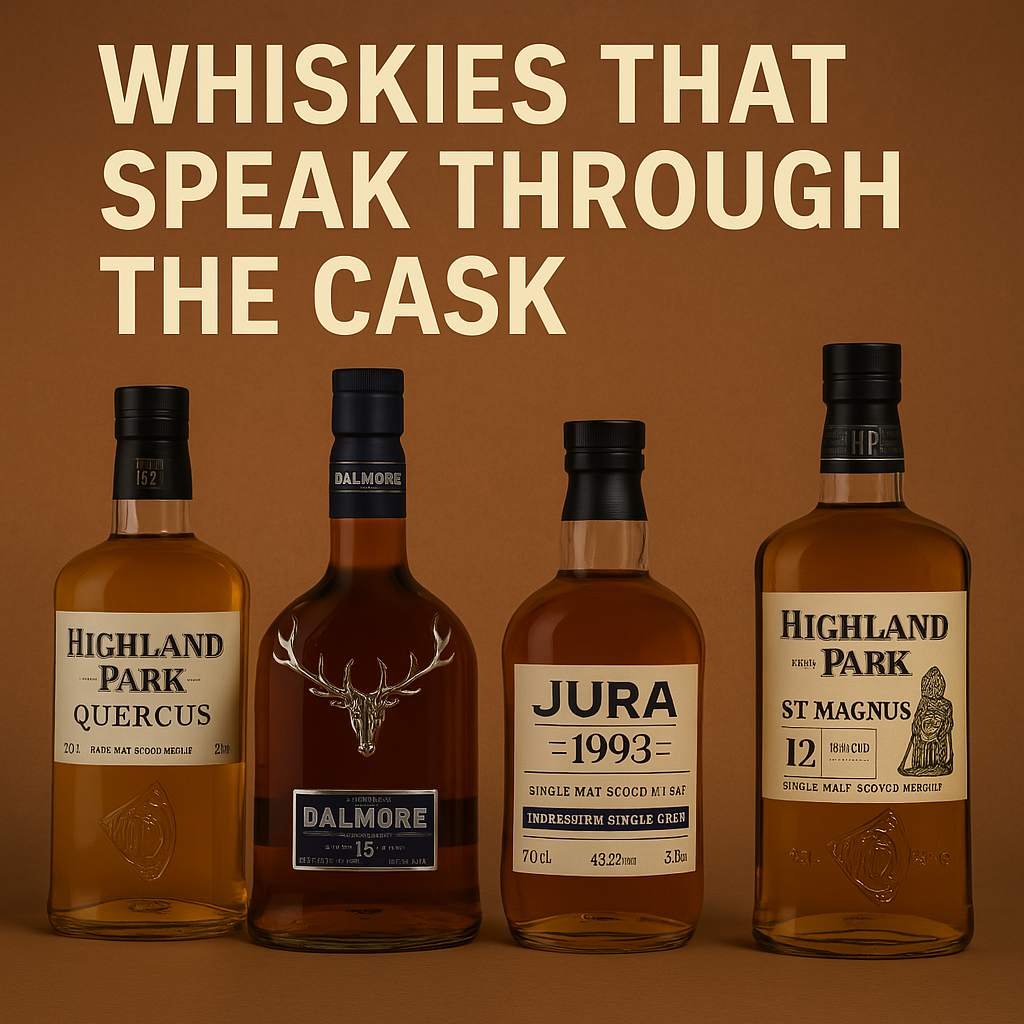
7. Highland Park St Magnus 12 Year Old Edition 2 – Oak, Smoke and Bottling Strength
Highland Park St Magnus 12 Year Old Edition 2 is a release-specific Orkney single malt that brings together cask influence and Highland Park’s distinctive spirit character.
Highland Park is known for combining malt sweetness, oak and gentle peat smoke.
St Magnus is particularly interesting because it allows enthusiasts to consider how sherry-cask influence and bottling strength affect a peated island malt.
What to Explore
- Sherry-associated oak character.
- Dried fruit and spice.
- Gentle smoke from the spirit.
- The relationship between bottling strength and perceived flavour.
Flavour direction: Malt, dried fruit, oak, spice and smoke.
Best for: Experienced drinkers comparing cask influence and spirit character.
Buying tip: Confirm that the listing is specifically St Magnus Edition 2 and verify its bottling specifications.
Explore Highland Park St Magnus →
8. Craigellachie 23 Year Old – When Distillery Character Meets Long Maturation
Craigellachie 23 Year Old is a reminder that oak isn’t the only source of whisky flavour.
Craigellachie uses traditional worm-tub condensers, which contribute to the distillery’s distinctive, weighty spirit character.
Extended maturation adds oak influence, but the underlying distillery style remains an important part of the finished whisky.
What to Explore
- Long maturation in oak.
- Fruit and spice development.
- Interaction between wood and robust spirit.
- The influence of traditional production methods.
Flavour direction: Fruit, malt, spice, oak and savoury depth.
Best for: Understanding why distillery character matters as much as maturation.
Buying tip: Check the exact edition and cask information rather than assuming all releases share identical maturation details.
Explore Craigellachie 23 Year Old →
How Oak Changes the Flavour of Scotch Whisky
During maturation, whisky interacts with the oak cask through several processes.
Extraction
The spirit extracts compounds from the wood, contributing aromas and flavours associated with vanilla, spice, coconut, caramel and oak.
Oxidation
Slow chemical changes during maturation can influence how flavours develop and combine.
Evaporation
Some alcohol and water are lost through the cask over time, often referred to as the angel’s share.
Changes to Spirit Character
Some harsher or more volatile characteristics can diminish or transform during maturation.
The result depends on the original spirit, cask activity, warehouse conditions and time.
American Oak vs European Oak: What’s the Difference?
American oak and European oak are often discussed as though they always produce two completely separate flavour profiles.
In practice, the differences are more complicated.
| Characteristic | American Oak | European Oak |
|---|---|---|
| Common flavour associations | Vanilla, coconut, sweetness | Spice, tannin, structured oak |
| Common Scotch uses | Ex-bourbon barrels and some sherry casks | Many sherry-seasoned casks |
| Typical influence | Often sweet and vanilla-led | Often spicy and tannic |
| Important qualification | Previous contents, seasoning, toast level, cask size and maturation conditions also affect flavour. | |
American oak is not exclusive to bourbon maturation, and European oak is not exclusive to sherry maturation.
Both can be used in sherry-seasoned casks.
First-Fill vs Refill Casks
One of the most important distinctions in Scotch maturation is whether a cask is first-fill or refill.
First-Fill Casks
A first-fill cask is being used to mature Scotch whisky for the first time after its previous use or seasoning.
These casks often have a stronger influence on flavour and colour.
Refill Casks
A refill cask has already been used for Scotch maturation.
Its oak influence may be gentler, allowing more of the distillery’s underlying spirit character to remain evident.
Neither is automatically better. The ideal cask depends on the spirit and the intended whisky style.
Sherry Cask Matured vs Sherry Cask Finished
These terms describe different maturation approaches.
Sherry-cask matured generally means the whisky spends its main maturation period in sherry-associated oak.
Sherry-cask finished means the whisky is transferred into a sherry cask for an additional period after initial maturation elsewhere.
A finish can introduce new flavours, but its impact depends on the cask and length of finishing.
Longer contact with sherry-seasoned oak does not automatically guarantee better whisky.
Does Cask Size Affect Whisky Maturation?
Yes. Cask size can influence the ratio of spirit to wood surface area.
Smaller casks generally expose more liquid to wood relative to their volume, although maturation is influenced by many other factors.
Common cask formats include:
- Barrel: Often around 200 litres.
- Hogshead: Often around 225–250 litres.
- Butt: Commonly around 500 litres.
- Puncheon: Often around 500 litres, with dimensions varying by type.
- Port pipe: A larger cask format with variable capacity.
These are approximate sizes rather than universal specifications.
Does Darker Whisky Mean Better Casks?
No. Colour alone isn’t a reliable measure of quality.
Darker whisky may reflect particular cask influences, but colour is also affected by maturation conditions and, where permitted, added plain caramel colouring.
A pale whisky matured in refill oak can be exceptional, while a dark whisky is not automatically richer or more complex.
Use tasting notes and maturation information rather than colour alone when choosing a bottle.
How to Compare Whisky Cask Types at Home
A small comparative tasting can help you understand cask influence more clearly.
- Start with bourbon-led whisky: Try Deanston 12 and look for vanilla, honey and malt.
- Move to sherry maturation: Compare Tamdhu 12 for dried fruit and spice.
- Explore a port finish: Try Glenmorangie Quinta Ruban 14 for richer fruit character.
- Compare a rum finish: Balvenie 14 Caribbean Cask offers a different type of sweetness.
- Finish with smoke and sherry: Kilchoman Sanaig demonstrates how cask influence interacts with peated spirit.
Use modest pours and taste at your own pace. You don’t need to sample every whisky in one session.
Remember that different distilleries and production methods also influence flavour, so these comparisons illustrate cask styles rather than isolating cask influence scientifically.
How to Choose Whisky by Cask Type
| If You Enjoy | Explore | Suggested Whisky |
|---|---|---|
| Vanilla, honey and gentle spice | Ex-bourbon oak | Deanston 12 |
| Raisins, nuts and rich spice | Sherry-seasoned oak | Tamdhu 12 |
| Chocolate and red fruit | Port-cask finishing | Glenmorangie Quinta Ruban 14 |
| Tropical fruit and sweet spice | Rum-cask finishing | Balvenie 14 Caribbean Cask |
| Smoke and dried fruit | Peated spirit with sherry influence | Kilchoman Sanaig |
| Layered oak and fruit | Multiple cask types | GlenAllachie 12 |
Common Mistakes When Choosing Whisky by Cask
- Assuming the cask creates every flavour: Distillery spirit character remains important.
- Confusing oak species with previous contents: American oak and bourbon casks are not interchangeable terms.
- Assuming sherry casks are always European oak: American oak is also used.
- Thinking first-fill always means better: Refill casks can produce excellent whisky.
- Judging by colour alone: Darker doesn’t necessarily mean better.
- Assuming more cask types means more complexity: Balance matters more than the number of casks.
- Confusing finishing with full maturation: The duration and method differ.
- Ignoring the spirit: Peat, fermentation and distillation all affect flavour.
Frequently Asked Questions About Scotch Whisky Casks
What casks are used to mature Scotch whisky?
Scotch is commonly matured in oak casks previously used for bourbon or associated with sherry production, along with other permitted cask types and finishes.
What does bourbon cask whisky taste like?
Common flavour associations include vanilla, honey, caramel, coconut and gentle oak spice.
What does sherry cask whisky taste like?
Sherry-associated casks often contribute dried fruit, nuts, spice, chocolate and oak character.
What is a refill whisky cask?
A refill cask has previously been used for Scotch maturation and may contribute gentler oak influence than a first-fill cask.
Is first-fill whisky better than refill whisky?
No. Both can produce excellent whisky, depending on the spirit and maturation goals.
Does American oak always mean bourbon cask?
No. American oak can also be used for sherry-seasoned casks and other maturation purposes.
Does European oak always mean sherry cask?
No. Oak species and previous cask contents are separate characteristics.
What is a whisky cask finish?
Finishing involves transferring whisky into another cask for an additional period of maturation.
What flavours come from port casks?
Port finishes are often associated with red fruit, berry sweetness, chocolate and spice.
What flavours come from rum casks?
Rum-cask finishing can contribute tropical fruit, vanilla, sweetness and spice.
Does cask size affect whisky?
Yes. Cask size can influence the amount of wood contact relative to the volume of spirit, although many other factors also affect maturation.
Does whisky get darker with age?
It can, but colour development depends on the cask and maturation conditions. Darker colour doesn’t necessarily mean greater age or quality.
Does whisky keep ageing in the bottle?
No. Whisky maturation age is measured by time spent in oak before bottling.
What is the best whisky for learning about cask influence?
Comparing Deanston 12, Tamdhu 12 and Glenmorangie Quinta Ruban 14 offers a useful introduction to different maturation styles.
Explore More Whisky Guides on ModHaven
- Sherried Whisky – Explore sherry-cask maturation.
- Cask Strength Whisky – Understand bottling strength and flavour.
- Browse Scotch Whisky – Compare whiskies with different maturation styles.
Final Thoughts: The Cask Shapes the Whisky, But Doesn’t Tell the Whole Story
Understanding Scotch whisky cask types can make choosing your next bottle much more rewarding.
For bourbon-cask character, start with Deanston 12. For rich sherry maturation, compare Tamdhu 12.
Glenmorangie Quinta Ruban 14 and Balvenie 14 Caribbean Cask demonstrate two different finishing styles, while Kilchoman Sanaig shows how sherry influence can complement peat smoke.
GlenAllachie 12 highlights the art of combining casks, and Craigellachie 23 reminds us that production methods and original spirit character matter too.
The best way to understand oak influence is to compare whiskies, pay attention to the details and discover which flavour profiles you enjoy most.
Affiliate disclosure: ModHaven may earn a commission from qualifying purchases through retailer links, at no additional cost to you. Prices, availability and specifications may change. Alcohol is intended for adults of legal drinking age. Please drink responsibly.