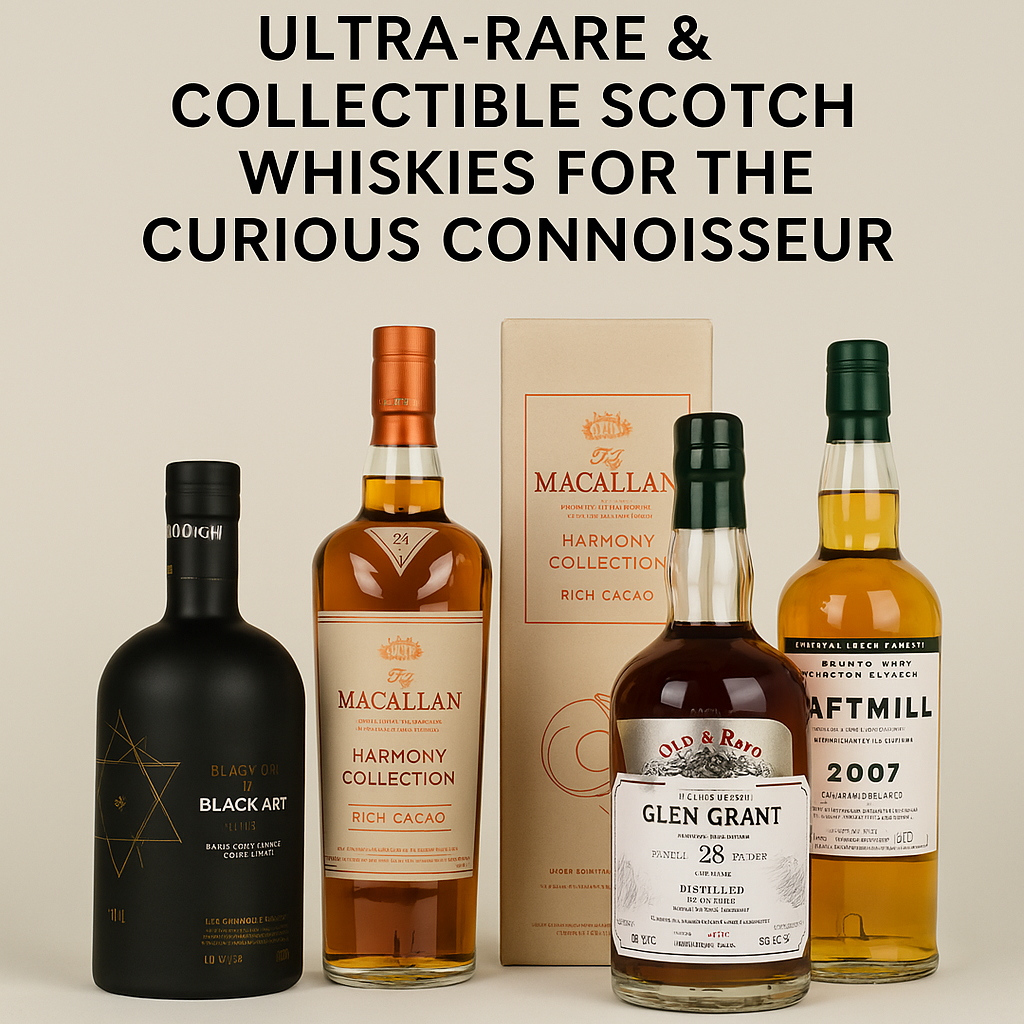
Ultra-Rare & Collectible Scotch Whiskies for the Curious Connoisseur
Some Scotch whiskies are memorable because of their flavour. Others offer something more: a connection to a particular moment in whisky history, an unusual cask, a long-discontinued release or a distillery whose production has become especially sought after.
For collectors exploring ultra-rare Scotch whiskies, those details can matter as much as the age statement.
From historic Port Ellen and Brora bottlings to vintage Bruichladdich, Rosebank and the distinctive releases of Daftmill, this guide explores eight whiskies with genuinely interesting stories.
These are not everyday drinking recommendations. Many are premium, historic or difficult to source, and their prices can be substantial.
Our focus is on what makes each bottling distinctive, what collectors should verify before buying and why rarity should never be confused with guaranteed investment value.
Important: A product appearing in the ModHaven catalogue does not guarantee current availability. For valuable bottles, confirm the exact edition, authenticity, seller credentials, bottle condition and price before purchasing.
Quick Picks: 8 Ultra-Rare Scotch Whiskies
- Best historic Islay release: Port Ellen 1978 34 Year Old, 13th Release.
- Best historic Highland release: Brora 35 Year Old, 13th Release.
- Best vintage Bruichladdich: Bruichladdich 1970 35 Year Old, 125th Anniversary.
- Best historic Lowland bottling: Rosebank 1992 21 Year Old, Special Releases 2014.
- Best farm-distillery discovery: Daftmill 2007 Sherry Cask #9.
- Best modern Daftmill release: Daftmill 2013 Summer Release, Bottled 2026.
- Best historic Ardbeg independent bottling: Ardbeg 1975 30 Year Old, Old & Rare Platinum.
- Best unusual mature Highland cask: Glen Garioch 1968 36 Year Old Rum Cask Finish.
Ultra-Rare Scotch Whisky Comparison Table
| Whisky | Age / Vintage | Distinctive Feature | Collector Interest |
|---|---|---|---|
| Port Ellen 13th Release | 1978 / 34 years | 2013 Special Release | Historic Port Ellen distillation |
| Brora 13th Release | 35 years | 2014 Special Release | Historic Brora production |
| Bruichladdich 125th Anniversary | 1970 / 35 years | Anniversary bottling | Historic distillery vintage |
| Rosebank Special Releases 2014 | 1992 / 21 years | Historic Lowland release | Closed-era distillation |
| Daftmill 2007 Cask #9 | 2007 vintage | Sherry cask, retailer exclusive | Farm distillery and identified cask |
| Daftmill 2013 Summer Release | 2013 vintage | 2026 seasonal release | Farm distillery production |
| Ardbeg 1975 Old & Rare | 1975 / 30 years | Independent Old & Rare bottling | Historic peated Islay whisky |
| Glen Garioch 1968 Old & Rare | 1968 / 36 years | Rum-cask finish | Historic vintage and unusual maturation |
1. Port Ellen 1978 34 Year Old – A Historic Islay Release
Port Ellen 1978 34 Year Old, 13th Release is one of the most historically significant bottles in this selection.
Port Ellen stopped distilling in 1983 and resumed production decades later. Bottles distilled before the original closure capture a particular period of Islay whisky history.
This expression was distilled in 1978 and released in 2013 as part of the distillery’s numbered Special Releases.
Why It Interests Collectors
- 1978 distillation vintage.
- 34-year age statement.
- 13th Release, issued in 2013.
- Historic pre-closure Port Ellen spirit.
- Part of a recognisable series of official releases.
Flavour direction: Mature peated Islay whisky can offer smoke, maritime notes, oak and developed fruit. Consult tasting notes for this exact release.
Collector’s tip: Check the release number, label, packaging, fill level and provenance. Modern Port Ellen production is not the same as these historic distillations.
Explore Port Ellen 1978 34 Year Old →
2. Brora 35 Year Old – A Historic Highland Collector’s Bottle
Brora 35 Year Old, 13th Release 2014 offers another connection to Scotland’s distilling past.
Brora ceased production in 1983 before being revived decades later. Historic Brora bottlings remain distinct from whisky produced following the distillery’s reopening.
This 35-year-old expression belongs to the official Special Releases series and carries a clearly identified release year.
Why It Interests Collectors
- 35-year age statement.
- 2014 release.
- 13th official release.
- Historic Brora distillation.
- Interest in older Highland whisky production.
Flavour direction: Historic Brora releases can vary, with some displaying waxy, fruity, earthy or smoky characteristics. The exact bottling should be assessed individually.
Collector’s tip: Verify the edition and bottle condition rather than relying solely on the Brora name.
3. Bruichladdich 1970 35 Year Old – A 125th Anniversary Bottling
Bruichladdich 1970 35 Year Old, 125th Anniversary combines a historic vintage with commemorative significance.
Bruichladdich has a distinctive place in Islay whisky history, with production periods and ownership changes that make its older bottlings especially interesting to study.
This 1970 vintage offers an opportunity to explore mature Bruichladdich from an earlier era.
Why It Interests Collectors
- 1970 vintage.
- 35-year age statement.
- 125th anniversary designation.
- Historic Bruichladdich spirit.
- Distinctive commemorative identity.
Flavour direction: Older Bruichladdich can offer fruit, malt, oak and maritime character, but the precise profile depends on its maturation history.
Collector’s tip: Confirm the anniversary edition, bottle size, ABV and original packaging.
Explore Bruichladdich 1970 35 Year Old →
4. Rosebank 1992 21 Year Old – A Historic Lowland Single Malt
Rosebank 1992 21 Year Old, Special Releases 2014 is an important example of historic Lowland whisky.
Rosebank stopped producing whisky in the 1990s before later being revived. Bottles distilled before its closure represent the distillery’s earlier production period.
This 1992 vintage belongs to that historic era and was released as part of the 2014 Special Releases.
Why It Interests Collectors
- 1992 distillation vintage.
- 21-year age statement.
- 2014 Special Releases bottling.
- Historic Rosebank production.
- Interest in traditional Lowland distillery styles.
Flavour direction: Rosebank is associated with elegant fruit, floral notes, malt and citrus, although older releases can develop more complex oak characteristics.
Collector’s tip: Verify the 1992 vintage and 2014 release rather than confusing it with other Rosebank 21-year-old expressions.
Explore Rosebank 1992 21 Year Old →
5. Daftmill 2007 Sherry Cask #9 – A Rare Farm-Distillery Selection
Daftmill 2007 Sherry Cask #9 offers a different kind of collector appeal.
Daftmill is a working farm distillery in Fife, known for its relatively small-scale production and seasonal distilling approach.
This particular 2007 vintage is identified as sherry cask #9 and was released as an exclusive for The Whisky Exchange.
Why It Interests Collectors
- 2007 vintage.
- Identified sherry cask #9.
- Retailer-exclusive bottling.
- Daftmill’s farm-distillery identity.
- Interest in individual cask releases.
Flavour direction: Sherry-associated oak may contribute dried fruit, nuts and spice alongside Daftmill’s underlying Lowland malt character.
Collector’s tip: Confirm the cask number, bottle count if documented, release details and provenance.
Explore Daftmill 2007 Sherry Cask #9 →
6. Daftmill 2013 Summer Release – A Modern Seasonal Bottling
Daftmill 2013 Summer Release, Bottled 2026 illustrates how a modern release can be collectible without being several decades old.
Daftmill’s seasonal production model and limited bottling programme attract enthusiasts interested in its particular approach to whisky making.
The 2013 vintage and 2026 bottling date distinguish this release from earlier Daftmill expressions.
Why It Interests Collectors
- 2013 vintage.
- 2026 bottling designation.
- Summer Release identity.
- Farm-distillery production.
- Opportunity to compare Daftmill releases across vintages.
Flavour direction: Check the exact release’s cask composition and tasting notes rather than assuming every Daftmill bottling tastes alike.
Collector’s tip: Seasonal releases may vary in cask composition and presentation. Verify the precise edition.
Explore Daftmill 2013 Summer Release →
7. Ardbeg 1975 30 Year Old – Old & Rare Platinum
Ardbeg 1975 30 Year Old, Old & Rare Platinum is a historic Islay bottling from an independent series.
Ardbeg is closely associated with powerful peated whisky, but expressions distilled in the 1970s can provide a very different perspective from the distillery’s modern core range.
This bottling combines a 1975 vintage with a 30-year age statement and the Old & Rare Platinum identity.
Why It Interests Collectors
- 1975 distillation vintage.
- 30-year age statement.
- Independent Old & Rare Platinum bottling.
- Historic Ardbeg production.
- Interest in mature peated Islay whisky.
Flavour direction: Mature Ardbeg may combine peat, oak, coastal notes and developed fruit, but exact tasting characteristics depend on the individual cask.
Collector’s tip: Check the bottler, cask details, label, fill level and documented provenance.
Explore Ardbeg 1975 30 Year Old →
8. Glen Garioch 1968 36 Year Old – A Remarkable Rum-Cask Finish
Glen Garioch 1968 36 Year Old, Old & Rare Platinum stands out for its combination of age, vintage and unusual cask finishing.
The listing identifies a 1968 vintage, 36-year age statement and rum-cask finish.
For collectors who enjoy studying how different cask types affect mature whisky, this is a particularly interesting Highland expression.
Why It Interests Collectors
- 1968 distillation vintage.
- 36-year age statement.
- Rum-cask finish.
- Old & Rare Platinum bottling.
- Unusual maturation profile for a historic Highland whisky.
Flavour direction: Mature oak, fruit and spice may interact with sweeter characteristics from rum-cask finishing. Exact tasting notes should be verified for the bottle.
Collector’s tip: Confirm the finishing details and bottle identity carefully, as historic independent bottlings can be difficult to compare.
Explore Glen Garioch 1968 36 Year Old →
What Makes a Scotch Whisky Ultra-Rare?
The term ultra-rare is widely used in whisky marketing, but it has no universal numerical definition.
For collectors, several characteristics can make a bottling particularly difficult to obtain.
Historic Distillation
Whisky produced before a distillery’s closure, major changes or later revival may have historical significance.
Port Ellen, Brora and Rosebank are examples of distilleries whose older production periods attract attention.
Specific Vintage and Cask
A bottling identified by a vintage and cask number can be distinguished from other releases produced by the same distillery.
Daftmill 2007 Sherry Cask #9 is one example.
Limited Production
Small production runs may create scarcity, but exact bottle counts should be verified rather than assumed.
Unusual Maturation
Rare cask types, unusual finishes or distinctive maturation histories can make a whisky interesting to enthusiasts.
Historical or Commemorative Significance
Anniversary bottlings and official Special Releases may document a particular moment in a distillery’s history.
However, historical interest doesn’t automatically mean strong resale demand.
Rare vs Collectible vs Valuable: What’s the Difference?
| Term | What It Means |
|---|---|
| Rare | Difficult to obtain or limited in surviving supply |
| Collectible | Of interest to people building whisky collections |
| Valuable | Commands a significant price in a particular market |
| Historic | Connected to a specific production era or important event |
A whisky can be rare without being especially valuable. It can also be expensive without being particularly scarce.
Collector interest, provenance, condition and market demand all matter.
Closed Distilleries and Historic Bottlings
Some of Scotland’s most famous collector bottles come from distilleries that stopped production for long periods.
Port Ellen, Brora and Rosebank are especially interesting because historic distillations remain separate from whisky produced following their later revivals.
It’s therefore more accurate to describe these bottles as historic or closed-era distillations than to assume the distilleries are still permanently closed.
For collectors, the vintage and production period can be just as important as the distillery name.
Are Independent Bottlings Worth Collecting?
Independent bottlers can offer some of the most distinctive Scotch whiskies available.
They may select individual casks, release unusual vintages or bottle whiskies from distilleries that rarely appear in mainstream ranges.
Collectors may value the details that independent bottlers provide, including:
- Distillation and bottling dates.
- Cask numbers.
- Cask types.
- Natural bottling strengths.
- Individual release identities.
However, independent bottling alone does not guarantee quality, rarity or future value.
How to Buy Ultra-Rare Scotch Whisky Safely
Buying expensive historic whisky requires more care than purchasing a regular supermarket bottle.
- Confirm the exact release: Check the distillery, vintage, age statement, release number and bottler.
- Examine photographs: Look at the label, seal, closure and fill level.
- Verify provenance: Ask for ownership and purchase history where appropriate.
- Check packaging: Original boxes and presentation materials may matter to collectors.
- Use reputable sellers: Seek clear business details, return policies and authenticity procedures.
- Compare completed sales: Asking prices alone may not reflect market value.
- Account for costs: Shipping, insurance, taxes and resale fees can be significant.
- Understand the risk: Rare whisky can be illiquid and may fall in value.
Does Damaged Packaging Affect Collectible Whisky?
It can.
Collectors often consider the condition of the bottle and its original packaging separately.
A damaged presentation box may reduce the desirability of an otherwise genuine, sealed bottle, particularly where packaging forms an important part of the release.
Never assume that the liquid is unaffected simply because damage appears limited to the box.
For expensive bottles, request clear photographs and confirm the seller’s description before purchasing.
How to Store Rare Scotch Whisky
- Keep bottles upright.
- Protect them from direct sunlight.
- Avoid significant temperature changes.
- Store packaging in a clean, dry environment.
- Retain invoices and provenance records.
- Inspect bottles periodically for leakage or seal problems.
- Consider appropriate insurance for valuable collections.
Unlike whisky maturing in a cask, bottled whisky does not continue ageing.
Should You Drink or Collect Rare Whisky?
Some enthusiasts prefer to preserve rare bottles as historical objects. Others believe whisky’s greatest value lies in being opened, shared and enjoyed.
Both approaches are valid.
If you’re buying to drink, consider the whisky’s likely flavour profile and whether its price represents good value to you.
If you’re collecting, focus more heavily on provenance, edition details, condition and documentation.
There is no guarantee that an unopened bottle will increase in value.
Common Mistakes When Buying Ultra-Rare Whisky
- Assuming rare means valuable: Scarcity and market demand are different.
- Confusing historic and modern releases: Distillery names can span very different production eras.
- Ignoring bottle condition: Seals, labels, fill levels and packaging matter.
- Relying on unverified bottle counts: Look for documented release information.
- Buying by age alone: Older doesn’t always mean better.
- Overlooking provenance: Authenticity is essential for high-value bottles.
- Assuming every limited edition is scarce: Production quantities vary.
- Treating whisky as a guaranteed investment: Resale values are unpredictable.
Frequently Asked Questions About Ultra-Rare Scotch Whisky
What is considered ultra-rare Scotch whisky?
There is no fixed definition. The term generally describes whiskies that are exceptionally difficult to obtain because of limited supply, historic significance or unusual release characteristics.
Why is historic Port Ellen whisky collectible?
Bottles distilled before the distillery’s 1983 closure represent a distinct period of production and have attracted substantial collector interest.
Is Brora still a closed distillery?
No. Brora resumed production after decades of closure. Historic bottlings remain distinct from whisky made following its revival.
Is Rosebank still closed?
No. Rosebank has been revived, but its older bottlings come from the original production era.
What makes Daftmill whisky interesting?
Daftmill’s farm-distillery identity, seasonal production and individually identifiable releases attract whisky enthusiasts.
Does a single cask always mean a small release?
A single cask limits the quantity available, but the exact bottle count depends on the cask and bottling specifications.
Are independent bottlings more collectible?
Some attract significant interest, especially when they have unusual vintages or cask histories. Others remain relatively overlooked.
Is older whisky always rarer?
No. Age alone doesn’t establish scarcity or demand.
Can damaged packaging affect value?
Yes. Packaging condition may matter to collectors, especially for premium presentation releases.
Does rare whisky continue ageing in the bottle?
No. Whisky maturation stops when the spirit is removed from the cask and bottled.
Should rare whisky be stored upright?
Yes. Upright storage is generally recommended for sealed spirits bottles.
Do rare Scotch whiskies always increase in value?
No. Prices can rise or fall, and the market for individual bottlings may be limited.
What should I check before buying a historic bottle?
Verify the exact release, authenticity, provenance, seller reputation, fill level, closure and packaging.
Is a commemorative bottling automatically valuable?
No. Collector demand, production quantity, condition and the individual release all influence value.
Explore More Whisky Guides on ModHaven
- Cask Strength Whisky – Learn about higher-strength bottlings.
- Sherried Whisky – Explore sherry-cask maturation.
- Browse Scotch Whisky – Explore more vintages, distilleries and releases.
Final Verdict: Ultra-Rare Scotch Whiskies Worth Knowing
The most fascinating ultra-rare Scotch whiskies combine distinctive release details with a meaningful place in whisky history.
Port Ellen 1978, Brora 35 and Rosebank 1992 stand out for their connections to historic production eras.
Bruichladdich 1970 offers vintage and commemorative significance, while the two Daftmill bottlings show how a small farm distillery can produce distinctive collector releases.
For enthusiasts of mature independent bottlings, Ardbeg 1975 and Glen Garioch 1968 offer contrasting examples of long-aged Scotch.
Collecting rare whisky is most rewarding when it begins with curiosity, careful research and an appreciation of the spirit itself.
Affiliate disclosure: ModHaven may earn a commission from qualifying purchases through retailer links, at no additional cost to you. Prices, availability and specifications may change. Collectible whisky values are unpredictable, and no financial return is guaranteed. Alcohol is intended for adults of legal drinking age. Please drink responsibly.