Rare Scotch Whisky Icons: 5 Bottles Over 30 Years Old
Some Scotch whiskies offer more than an impressive age statement. They capture a particular distilling era, an individual cask selection or decades of maturation that cannot be repeated in exactly the same way.
For collectors interested in rare Scotch whisky over 30 years old, the most fascinating bottles are often those with a distinctive history.
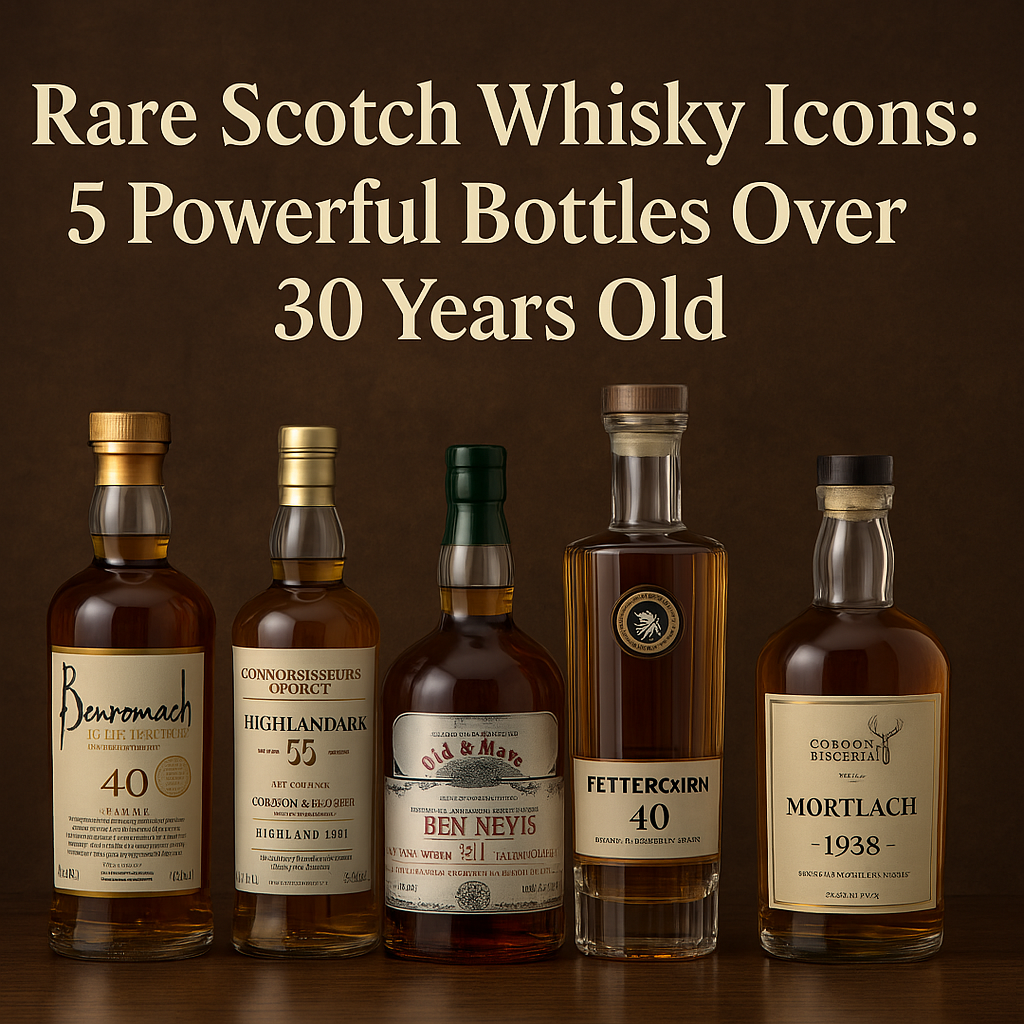
A 35-year-old Highland Park can reveal a different side of Orkney whisky, while a 1936 Mortlach provides a connection to pre-war Speyside distilling. Mature Ben Nevis and Fettercairn expressions demonstrate the diversity of Highland whisky, and a 42-year-old Glenrothes offers another perspective on extended oak maturation.
In this guide, we compare five exceptional mature Scotch whiskies, explain their individual appeal and explore what collectors should check before making an expensive purchase.
These are specialist bottlings rather than everyday recommendations. Some may be discontinued, difficult to source or available only through limited secondary-market channels.
Buying note: Catalogue listings do not guarantee live stock or current prices. Verify the exact edition, authenticity, bottle condition and seller before purchasing.
Quick Comparison: 5 Rare Scotch Whisky Icons
| Whisky | Age | Region | Main Collector Appeal |
|---|---|---|---|
| Highland Park 35 John Goodwin | 35 years | Orkney | Distinctive named release |
| Ben Nevis 1991 Old & Rare | 31 years | Highland | Vintage independent bottling |
| Fettercairn 40 | 40 years | Highland | Four decades of maturation |
| Mortlach 1936 Connoisseurs Choice | 35 years | Speyside | Pre-war distillation vintage |
| Glenrothes 1980 | 42 years | Speyside | Historic vintage and long maturation |
1. Highland Park 35 Year Old John Goodwin – A Distinctive Orkney Release
Highland Park 35 Year Old John Goodwin is an intriguing choice for collectors interested in mature Orkney single malt.
Highland Park has a recognisable distillery style that combines malt sweetness, oak spice and gentle peat smoke.
Long maturation can change how these characteristics interact, potentially adding deeper fruit, oak and spice while softening some of the more assertive elements of the spirit.
The John Goodwin designation gives this bottling a specific identity beyond its age statement.
Why Collectors May Be Interested
- 35-year age statement.
- Highland Park distillery heritage.
- John Goodwin release identity.
- Mature Orkney single malt.
- Interest among collectors of unusual Highland Park bottlings.
Flavour direction: Mature oak, malt, dried fruit, spice and subtle smoke are reasonable characteristics to investigate, although the exact tasting profile should be confirmed for this release.
Collector’s tip: Verify the bottling identity, maturation details and presentation. Do not confuse it with Highland Park 1987 Connoisseurs Choice or other 35-year-old releases.
Explore Highland Park 35 Year Old →
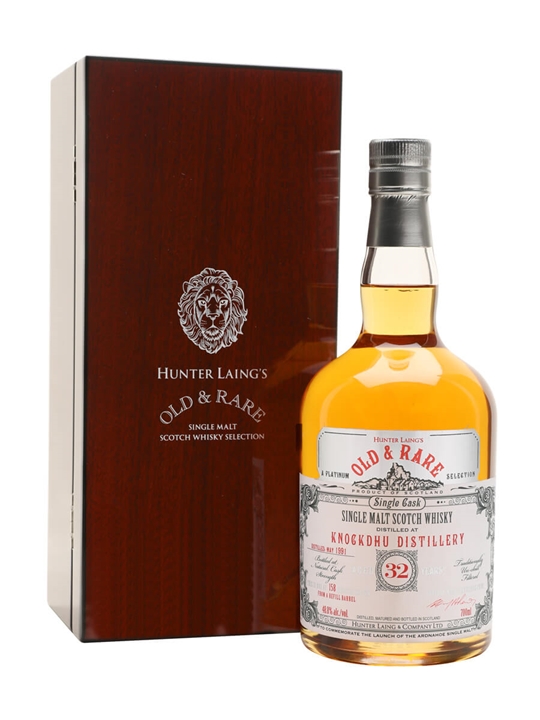
2. Ben Nevis 1991 31 Year Old – Old & Rare Highland Character
Ben Nevis 1991 31 Year Old Old & Rare offers an alternative to more familiar luxury Scotch brands.
Ben Nevis has developed a following among enthusiasts who appreciate its distinctive Highland spirit.
Its character can include fruit, malt, waxy textures and savoury notes, although the balance varies significantly between casks.
This 1991 vintage provides an opportunity to explore Ben Nevis after more than three decades of maturation.
Why Collectors May Be Interested
- 1991 vintage.
- 31-year age statement.
- Old & Rare bottling series.
- Independent bottling identity.
- Distinctive Highland distillery character.
Flavour direction: Orchard fruit, mature oak, spice and potentially waxy or earthy notes.
Collector’s tip: Check the bottler, exact ABV, cask information and bottle condition. Do not assume all Ben Nevis 1991 releases share the same specifications.
Explore Ben Nevis 1991 31 Year Old →
3. Fettercairn 40 Year Old – Four Decades of Highland Maturation
Fettercairn 40 Year Old is a particularly interesting expression for whisky enthusiasts who enjoy mature Highland spirit.
Fettercairn is associated with a distinctive production process that includes cooling water running down the exterior of its spirit still.
The distillery’s character is often associated with fruit-forward notes, which can develop alongside deeper oak influences during extended maturation.
At 40 years old, this whisky represents four decades of interaction between spirit and oak.
Why Collectors May Be Interested
- 40-year age statement.
- Long-aged Highland single malt.
- Distinctive Fettercairn production heritage.
- Potentially complex mature fruit and oak character.
- Interest among collectors of older Highland expressions.
Flavour direction: Tropical fruit, honey, spice and mature oak are often associated with older Fettercairn whisky.
Collector’s tip: Verify the exact edition and cask programme. Different Fettercairn 40-year-old releases may use different maturation and finishing arrangements.
Explore Fettercairn 40 Year Old →
4. Mortlach 1936 35 Year Old – Pre-War Speyside History
Mortlach 1936 35 Year Old Connoisseurs Choice is arguably the most historically interesting bottling in this selection.
Its 1936 distillation vintage places the spirit firmly in the pre-Second World War era.
Mortlach is known for its robust spirit character and distinctive distillation process, which has contributed to the distillery’s reputation among Speyside enthusiasts.
This bottling also carries the Connoisseurs Choice identity associated with independent bottler Gordon & MacPhail.
Why Collectors May Be Interested
- 1936 distillation vintage.
- 35-year age statement.
- Historic Speyside production.
- Connoisseurs Choice bottling.
- Strong historical interest for whisky enthusiasts.
Flavour direction: Older Mortlach can show mature fruit, spice, oak and savoury complexity, although exact tasting notes should be verified.
Collector’s tip: Bottles of this age deserve particular care. Check provenance, authenticity, closure, fill level and label condition before purchasing.
Explore Mortlach 1936 35 Year Old →
5. Glenrothes 1980 42 Year Old – Historic Speyside Maturation
Glenrothes 1980 42 Year Old completes this collection with one of the oldest whiskies featured.
Glenrothes is known for its Speyside character and longstanding interest in the relationship between spirit and oak maturation.
A whisky distilled in 1980 and matured for 42 years offers an opportunity to explore how prolonged ageing can transform a distillery’s style.
The 1980 vintage also gives the bottle a clear historical reference.
Why Collectors May Be Interested
- 1980 vintage.
- 42-year age statement.
- Historic Speyside spirit.
- More than four decades of oak maturation.
- Interest for collectors of long-aged Glenrothes.
Flavour direction: Mature fruit, oak, spice and potentially nutty or dried-fruit characteristics, depending on the cask.
Collector’s tip: Confirm the precise bottling, cask details, ABV and packaging. A 42-year age statement alone does not establish rarity or market value.
Explore Glenrothes 1980 42 Year Old →
What Makes These Five Scotch Whiskies Special?
Although each bottle has spent more than three decades maturing, their appeal comes from different characteristics.
| Collector Priority | Whisky to Investigate |
|---|---|
| Distinctive named release | Highland Park 35 John Goodwin |
| Vintage independent Highland whisky | Ben Nevis 1991 31 Year Old |
| Four decades of maturation | Fettercairn 40 Year Old |
| Pre-war distillation history | Mortlach 1936 35 Year Old |
| Long-aged Speyside vintage | Glenrothes 1980 42 Year Old |
These distinctions are more meaningful than simply ranking bottles by price or age.
Does Whisky Become Better After 30 Years?
Not automatically.
During maturation, whisky interacts with oak, undergoes oxidation and gradually changes in aroma, flavour and texture.
These processes can create complexity, but excessive oak influence can also reduce balance.
A well-matured 18-year-old Scotch may be more enjoyable than a 40-year-old whisky from an overactive cask.
The skill lies in selecting and bottling whisky when its character is at its best.
Why Vintage Matters to Whisky Collectors
A distillation vintage identifies the year in which the whisky was produced.
For historic bottles, this can connect the whisky to a particular period in the distillery’s history.
Mortlach 1936 is especially notable because it predates the Second World War.
Ben Nevis 1991 and Glenrothes 1980 offer different examples of vintage-specific Scotch from later production periods.
However, a vintage does not automatically mean the whisky is a single cask or a limited edition. These characteristics must be verified separately.
Cask Strength vs Standard Strength in Mature Scotch
Some mature Scotch whiskies are bottled at natural cask strength, while others are reduced to a lower ABV.
Both approaches can produce excellent whisky.
Cask strength may offer greater intensity and allow drinkers to experiment with water.
Lower-strength bottling can sometimes provide a more approachable experience.
Neither is inherently superior, and a whisky’s bottling strength does not prove whether it has been chill filtered or coloured.
Always check the specifications of the exact release.
How to Evaluate a Rare Scotch Whisky Before Buying
When considering a valuable mature Scotch, work through the following checks.
- Identify the exact bottle: Confirm distillery, age, vintage and edition.
- Check the bottler: Establish whether it is an official or independent release.
- Verify the cask: Look for documented cask types and numbers.
- Confirm the ABV: Don’t rely on figures from similar releases.
- Inspect the condition: Examine fill level, closure, label and packaging.
- Research provenance: Seek clear ownership and purchase history where appropriate.
- Compare prices: Completed sales may be more informative than asking prices.
- Consider resale risks: Fees, taxes, insurance and limited demand can affect outcomes.
How to Store Rare Scotch Whisky
- Keep bottles upright.
- Avoid direct sunlight.
- Protect bottles from significant temperature fluctuations.
- Keep labels and original packaging in good condition.
- Retain receipts and provenance records.
- Inspect valuable bottles periodically for leakage or closure problems.
- Consider suitable insurance for high-value collections.
Whisky does not continue ageing after bottling. A 35-year-old Scotch remains a 35-year-old whisky even if the sealed bottle is stored for another decade.
Are Rare Scotch Whiskies Good Investments?
Some collectible whiskies have achieved high resale prices, but this does not mean all rare or mature Scotch will increase in value.
Prices can be influenced by changing collector demand, authenticity, bottle condition and wider market conditions.
High-value whisky may also be difficult or expensive to resell.
For most enthusiasts, the strongest reason to collect whisky is an appreciation of its flavour, history and craftsmanship rather than an expectation of financial returns.
Common Mistakes When Collecting Rare Scotch
- Assuming older means better: Age does not guarantee quality.
- Confusing similar releases: Verify vintages, editions and bottlers.
- Assuming every rare whisky is cask strength: Bottling strengths vary.
- Assuming all releases are non-chill filtered: Check the producer’s specifications.
- Ignoring bottle condition: Fill level, seals and packaging can matter.
- Buying based only on price: Expensive does not automatically mean exceptional.
- Overlooking provenance: Authenticity is essential for historic bottles.
- Expecting guaranteed appreciation: Collectible whisky values can fall.
Frequently Asked Questions About Rare Scotch Over 30 Years Old
What makes Scotch whisky over 30 years old rare?
Long maturation can reduce the quantity available, but actual rarity depends on production volume, surviving stock and the individual release.
Is 35-year-old Scotch better than 18-year-old Scotch?
Not necessarily. Quality depends on the spirit, cask and maturation conditions as well as age.
What does a 40-year-old age statement mean?
It means the youngest whisky in the bottle spent at least 40 years maturing in oak before bottling.
Does whisky improve after 30 years?
It may develop greater complexity, but excessive oak influence can also affect balance.
What makes Mortlach 1936 historically important?
Its 1936 distillation vintage connects the whisky to a period before the Second World War.
Are independent bottlings collectible?
Some are, particularly when they feature unusual vintages, individual casks or historic production periods.
Does cask strength mean single cask?
No. Cask strength describes bottling strength, while single cask describes the source of the whisky.
Does cask strength mean natural colour?
No. Colouring and bottling strength are separate considerations.
Is a rare whisky always valuable?
No. Scarcity alone does not guarantee market demand or high resale prices.
Does Scotch continue ageing in the bottle?
No. Whisky’s age statement reflects maturation time in oak before bottling.
Should collectible Scotch be stored upright?
Yes. Upright storage is generally recommended for sealed spirits bottles.
Does damaged packaging affect collector interest?
It can. Original packaging and condition may influence desirability.
Can rare Scotch whisky lose value?
Yes. Collector demand and resale prices are unpredictable.
Should I open a rare whisky?
That depends on your goals. Some collectors preserve bottles, while others prefer to enjoy the whisky itself.
Explore More Whisky Guides on ModHaven
- Sherried Whisky – Explore rich sherry-cask maturation.
- Cask Strength Whisky – Understand higher-strength Scotch.
- Browse Scotch Whisky – Discover more mature and vintage bottlings.
Final Verdict: Five Rare Scotch Whisky Icons
These five rare Scotch whiskies over 30 years old demonstrate how different a mature whisky collection can be.
Highland Park 35 John Goodwin offers distinctive Orkney heritage, while Ben Nevis 1991 represents characterful independent Highland bottling.
Fettercairn 40 provides an example of four decades of maturation, and Glenrothes 1980 highlights the appeal of historic Speyside vintages.
For whisky historians, Mortlach 1936 is especially interesting because of its connection to pre-war distilling.
The best bottle for your collection isn’t necessarily the oldest or most expensive. It’s the one whose history, provenance and character genuinely interest you.
Affiliate disclosure: ModHaven may earn a commission from qualifying purchases through retailer links, at no additional cost to you. Prices, availability and specifications may change. Collectible whisky values are unpredictable and no financial return is guaranteed. Alcohol is intended for adults of legal drinking age. Please drink responsibly.