Rare Scotch Whisky Legends: Three Ultra-Aged Bottles Compared
What makes a truly exceptional old Scotch whisky? Is it the number of years spent in oak, the rarity of its distillation vintage, or the story of the distillery that produced it?
For collectors exploring ultra-aged Scotch whisky, the answer is rarely just one of these things.
Some bottles are fascinating because of their historical significance. Others demonstrate how decades of maturation can transform the character of a single malt. And some offer a distinctive combination of age, distillery identity and carefully selected oak.
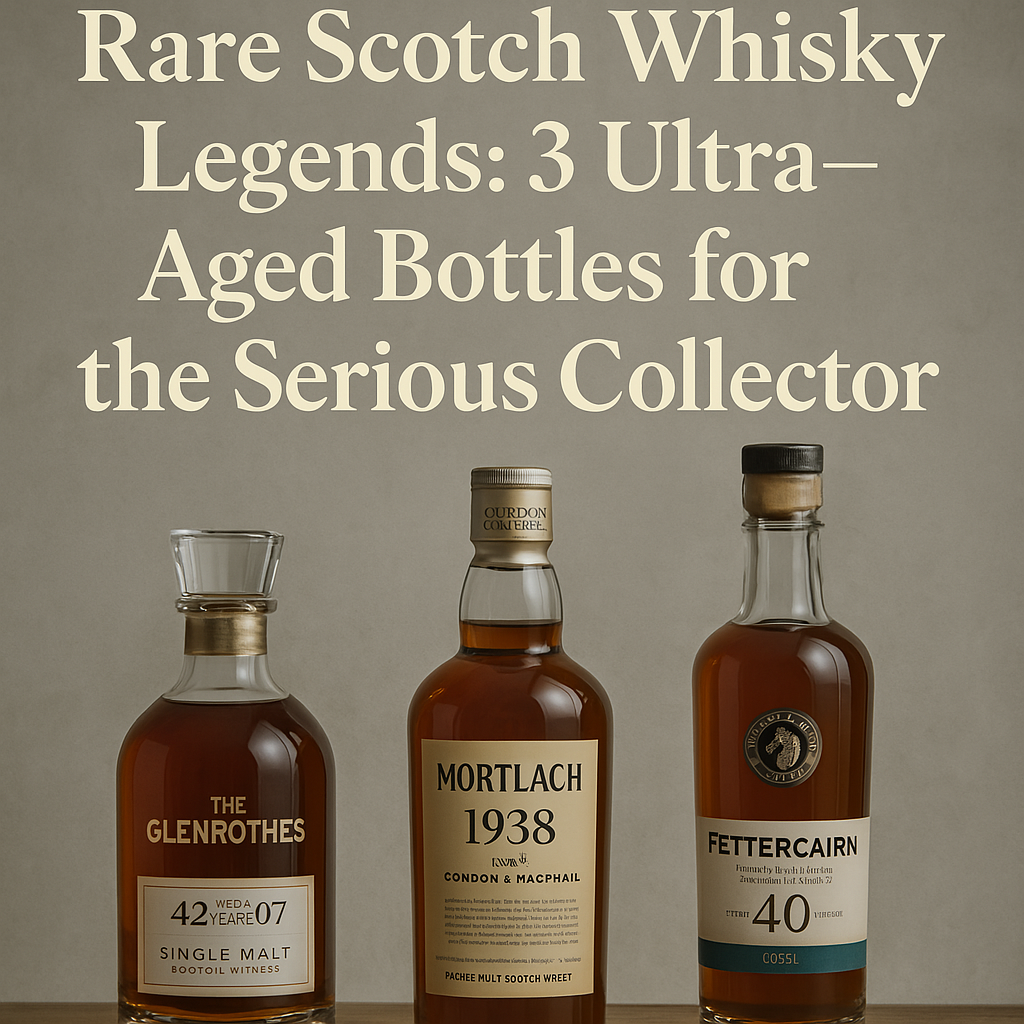
In this guide, we’re comparing three very different expressions: Glenrothes 1980 42 Year Old, Mortlach 1936 35 Year Old and Fettercairn 40 Year Old.
All three represent long-aged Scotch whisky, but they appeal to different types of collectors. One offers a vintage Speyside perspective, another provides a connection to pre-war distilling, and the third showcases mature Highland whisky.
We’ll explore their individual histories, potential flavour characteristics, collector appeal and the important details to verify before purchasing.
Buying note: These are specialist bottles that may be discontinued or difficult to source. Catalogue listings do not guarantee current availability. Confirm the exact release, authenticity, price and bottle condition before buying.
At a Glance: Three Ultra-Aged Scotch Whiskies
| Whisky | Age | Region | Key Attraction |
|---|---|---|---|
| Glenrothes 1980 | 42 years | Speyside | Historic vintage and extended maturation |
| Mortlach 1936 | 35 years | Speyside | Pre-war distillation and independent bottling history |
| Fettercairn 40 | 40 years | Highland | Distinctive distillery character after four decades in oak |
1. Glenrothes 1980 42 Year Old – Four Decades of Speyside Maturation
Glenrothes 1980 42 Year Old is an intriguing example of long-aged Speyside single malt.
Distilled in 1980 and matured for 42 years, it offers an opportunity to explore how extended contact with oak can change a distillery’s original spirit character.
Glenrothes is associated with fruit-led Speyside whisky and a longstanding emphasis on maturation.
Over several decades, a cask may develop increasingly complex relationships between fruit, oak, spice and texture. However, the result depends heavily on the individual cask.
Why Glenrothes 1980 Is Interesting
- 1980 vintage: Connects the whisky to a specific distillation period.
- 42-year age statement: Represents more than four decades of oak maturation.
- Speyside character: Offers a mature interpretation of Glenrothes spirit.
- Release identity: The vintage and age make it distinguishable from standard Glenrothes bottlings.
- Collector appeal: Particularly relevant to enthusiasts of older Speyside whisky.
What Might It Taste Like?
Long-aged Glenrothes can display developed fruit, oak spice and mature woody characteristics. Depending on the cask, nutty, dried-fruit or vanilla-like notes may also emerge.
However, it would be misleading to promise a specific tasting profile without confirming the exact release’s official notes.
Who Should Consider It?
This is an interesting option for collectors who appreciate vintage-specific Scotch and want to explore the influence of exceptionally long maturation.
Before buying: Confirm the exact edition, ABV, cask composition, bottle size and packaging. Do not assume the whisky spent time in both bourbon and sherry casks unless the producer confirms it.
Explore Glenrothes 1980 42 Year Old →
2. Mortlach 1936 35 Year Old – A Connection to Pre-War Scotch History
Mortlach 1936 35 Year Old Connoisseurs Choice is historically distinctive for a reason that goes beyond its age statement.
The whisky was distilled in 1936, before the Second World War, placing its production in a very different period of Scotch whisky history.
Mortlach is a Speyside distillery known for a relatively robust spirit character and a distinctive distillation process.
Its older bottlings can provide fascinating insight into how that character developed in earlier production eras.
This expression also belongs to the Connoisseurs Choice series associated with independent bottler Gordon & MacPhail.
Why Mortlach 1936 Is Interesting
- 1936 vintage: Spirit produced before the Second World War.
- 35-year maturation: A substantial period in oak.
- Historic distillery production: A connection to an earlier era of Mortlach whisky.
- Independent bottling: Part of the Connoisseurs Choice tradition.
- Historical significance: Especially interesting to collectors studying old Scotch releases.
What Might It Taste Like?
Mortlach is often associated with rich malt, fruit and savoury depth.
After 35 years in oak, a bottling may also show mature spice, leather-like impressions and developed woody notes.
But these are broad style associations, not confirmed tasting notes for this specific bottle.
Why Provenance Matters Particularly Here
Historic bottles deserve careful inspection.
For a release connected to a 1936 vintage, collectors should verify the label, closure, fill level, bottle condition and any available ownership documentation.
The whisky’s historical importance does not remove the need for authentication.
Before buying: Confirm the precise Connoisseurs Choice edition, bottling date, cask details and provenance.
Explore Mortlach 1936 35 Year Old →
3. Fettercairn 40 Year Old – Mature Highland Whisky with a Distinctive Spirit
Fettercairn 40 Year Old provides a different perspective on long-aged Scotch.
Unlike the two Speyside expressions above, Fettercairn is a Highland distillery with a particularly distinctive production process.
Its spirit stills use a cooling arrangement that allows water to flow over their exterior, helping influence the character of the spirit.
Fettercairn is often associated with a fruit-forward style, making its mature bottlings especially interesting to enthusiasts who enjoy tropical-fruit characteristics.
Why Fettercairn 40 Is Interesting
- 40-year age statement: Four decades of oak maturation.
- Highland distillery: A contrast with the two Speyside selections.
- Distinctive production method: Fettercairn’s unusual still-cooling process.
- Mature fruit character: An interesting area to explore in older Fettercairn.
- Collector appeal: A premium expression from a distillery with its own recognisable identity.
What Might It Taste Like?
Older Fettercairn whisky is often associated with tropical fruit, honey, spice and mature oak.
Depending on the cask programme, additional dried-fruit or chocolate-like characteristics may be present.
However, different Fettercairn 40-year-old releases can have different maturation arrangements.
Does It Have a Sherry-Cask Finish?
Some Fettercairn releases have used distinctive finishing casks, including sherry-related maturation.
For this particular bottle, buyers should confirm the precise edition before relying on a claim about Apostoles sherry casks or a specific ABV.
Before buying: Verify the edition, cask programme, ABV and packaging.
Explore Fettercairn 40 Year Old →
Which of These Three Whiskies Is Most Interesting?
That depends on what you value in a collection.
| Your Main Interest | Whisky to Explore | Why |
|---|---|---|
| Very long maturation | Glenrothes 1980 42 Year Old | Four decades of Speyside maturation |
| Historic distillation | Mortlach 1936 35 Year Old | Pre-war vintage and independent bottling heritage |
| Distinctive Highland style | Fettercairn 40 Year Old | Unusual production method and mature fruit character |
There is no objective winner.
The Glenrothes offers the oldest age statement, Mortlach the earliest vintage, and Fettercairn a contrasting Highland distillery style.
What Does Ultra-Aged Scotch Whisky Mean?
The term ultra-aged is an informal description rather than an official Scotch whisky category.
It is commonly used for whiskies matured for several decades, often 30 years or longer.
However, the legal age statement has a specific meaning: it refers to the youngest whisky in the bottle and the time that whisky spent maturing in oak.
A 40-year-old Scotch must contain whisky matured for at least 40 years.
It does not mean the whisky has been in its bottle for 40 years.
How Does Whisky Change After 35 or 40 Years?
During maturation, whisky interacts with its oak cask.
Several processes contribute to flavour development:
- Extraction: Compounds from the oak influence aroma, flavour and colour.
- Oxidation: Slow chemical changes can affect the whisky’s character.
- Evaporation: Some liquid is lost during maturation.
- Integration: Spirit and wood characteristics develop together over time.
The result can be exceptionally complex whisky, but long maturation also carries risks.
If a cask becomes too dominant, the whisky may develop excessive bitterness, dryness or woody flavours.
This is why older doesn’t automatically mean better.
Vintage vs Age Statement: Which Matters More?
Both provide useful information, but they describe different things.
Vintage identifies the year in which the whisky was distilled.
Age statement identifies how long the youngest whisky in the bottle matured in oak.
For example, Mortlach 1936 has a historically significant distillation year, while Glenrothes 1980 combines a later vintage with a longer 42-year maturation period.
Neither characteristic alone establishes quality, rarity or value.
Are Historic Bottlings More Collectible Than Modern Luxury Releases?
Not necessarily.
Historic bottles can appeal to collectors because they represent earlier production methods, old distillation periods or discontinued releases.
Modern luxury bottlings may attract interest through distinctive maturation, packaging or limited production.
Collector demand varies significantly between individual releases.
For serious purchases, the exact edition and its provenance are more important than broad labels such as historic, luxury or rare.
How to Evaluate an Expensive Ultra-Aged Scotch
- Confirm the bottle identity: Check the distillery, vintage, age statement and edition.
- Verify the bottler: Determine whether it is an official or independent release.
- Check the cask details: Do not assume a particular finish or maturation history.
- Confirm the ABV: Similar releases may have different strengths.
- Inspect the condition: Examine the fill level, closure, label and packaging.
- Research provenance: Seek reputable sellers and clear documentation.
- Compare completed sales: Advertised prices may not reflect achieved market values.
- Consider total costs: Shipping, insurance, taxes and resale fees may be significant.
How to Store Valuable Scotch Whisky
Proper storage can help protect both the whisky and its presentation.
- Keep bottles upright.
- Protect them from direct sunlight.
- Avoid significant temperature fluctuations.
- Store original packaging in a clean, dry environment.
- Retain invoices and provenance records.
- Check bottles periodically for leakage or closure problems.
- Consider appropriate insurance for valuable collections.
Unlike whisky ageing in a cask, bottled Scotch does not continue to mature.
Should You Open an Ultra-Aged Scotch Whisky?
Some collectors prefer to preserve historic bottles, while others believe the best way to appreciate whisky is to drink it.
Both approaches are valid.
If you plan to open a rare bottle, consider the occasion and the people with whom you’d like to share it.
If you intend to preserve it, focus on condition, provenance and storage.
Neither approach guarantees financial value, but both can offer personal enjoyment.
Are Ultra-Aged Scotch Whiskies Good Investments?
Some rare whisky releases have achieved high prices at auction, but this doesn’t mean all ultra-aged Scotch will appreciate.
Market demand can change, and expensive bottles may be difficult to resell.
Authenticity, condition, transaction costs and the number of interested buyers can all affect the outcome.
For most enthusiasts, the strongest reason to collect whisky is an appreciation of its flavour, history and craftsmanship.
Frequently Asked Questions About Ultra-Aged Scotch Whisky
What is ultra-aged Scotch whisky?
It is an informal term generally used for Scotch matured for several decades, often 30 years or more.
Is 40-year-old Scotch always rare?
It is generally less common than younger whisky, but actual rarity depends on the individual release and surviving supply.
Is 42-year-old Scotch better than 35-year-old Scotch?
Not necessarily. Cask quality, distillery character and balance matter more than age alone.
What makes Mortlach 1936 historically significant?
Its distillation vintage predates the Second World War, connecting the whisky to an earlier period of Scotch production.
Is Glenrothes 1980 a single cask?
That should be confirmed from the exact release specifications rather than inferred from its vintage and age.
Does Fettercairn 40 use sherry casks?
Maturation details can vary between editions. Check the specific bottling’s official information.
Does old whisky become smoother?
Age can change texture and flavour, but older whisky is not automatically smoother or better balanced.
What is the difference between vintage and age?
Vintage identifies the distillation year, while the age statement describes the minimum maturation period.
Does whisky continue ageing after bottling?
No. Whisky’s maturation age is determined by time spent in oak before bottling.
Should collectible whisky be stored upright?
Yes. Upright storage is generally recommended for sealed spirits bottles.
Does packaging condition matter?
It can. Original boxes, labels and seals may influence collector interest.
Can ultra-aged Scotch lose value?
Yes. Collector demand and resale prices are unpredictable.
Are independent bottlings collectible?
Some are, particularly when they feature distinctive vintages or cask histories.
Should I buy whisky based on age alone?
No. Consider the distillery, maturation, provenance, condition and your own taste preferences.
Explore More Whisky Guides on ModHaven
- Sherried Whisky – Learn about sherry-cask maturation.
- Cask Strength Whisky – Understand higher-strength Scotch.
- Browse Scotch Whisky – Explore more vintage and mature bottlings.
Final Verdict: Three Different Ways to Experience Whisky History
These three ultra-aged Scotch whiskies demonstrate that long maturation can be fascinating for very different reasons.
Glenrothes 1980 42 Year Old offers a chance to explore more than four decades of Speyside maturation.
Mortlach 1936 35 Year Old stands out for its connection to pre-war distilling history.
Fettercairn 40 Year Old provides a contrasting Highland expression shaped by its distinctive distillery character and long maturation.
For collectors, the most rewarding bottle isn’t necessarily the oldest or most expensive. It’s the one whose history, provenance and individual character make it worth exploring.
Affiliate disclosure: ModHaven may earn a commission from qualifying purchases through retailer links, at no additional cost to you. Prices, availability and specifications may change. Collectible whisky values are unpredictable and no financial return is guaranteed. Alcohol is intended for adults of legal drinking age. Please drink responsibly.