Mature Malts & Hidden Gems: 8 Rare Scotch Whiskies for Collectors
Some of the most interesting rare Scotch whiskies aren’t the bottles with the biggest marketing campaigns. They’re historic releases, independently bottled single malts, mature blends and distinctive expressions from distilleries with devoted followings.
For collectors, the appeal often lies in the details: a particular vintage, a specific cask, an unusual bottling series or a whisky that captures a distillery’s character at a particular moment in time.
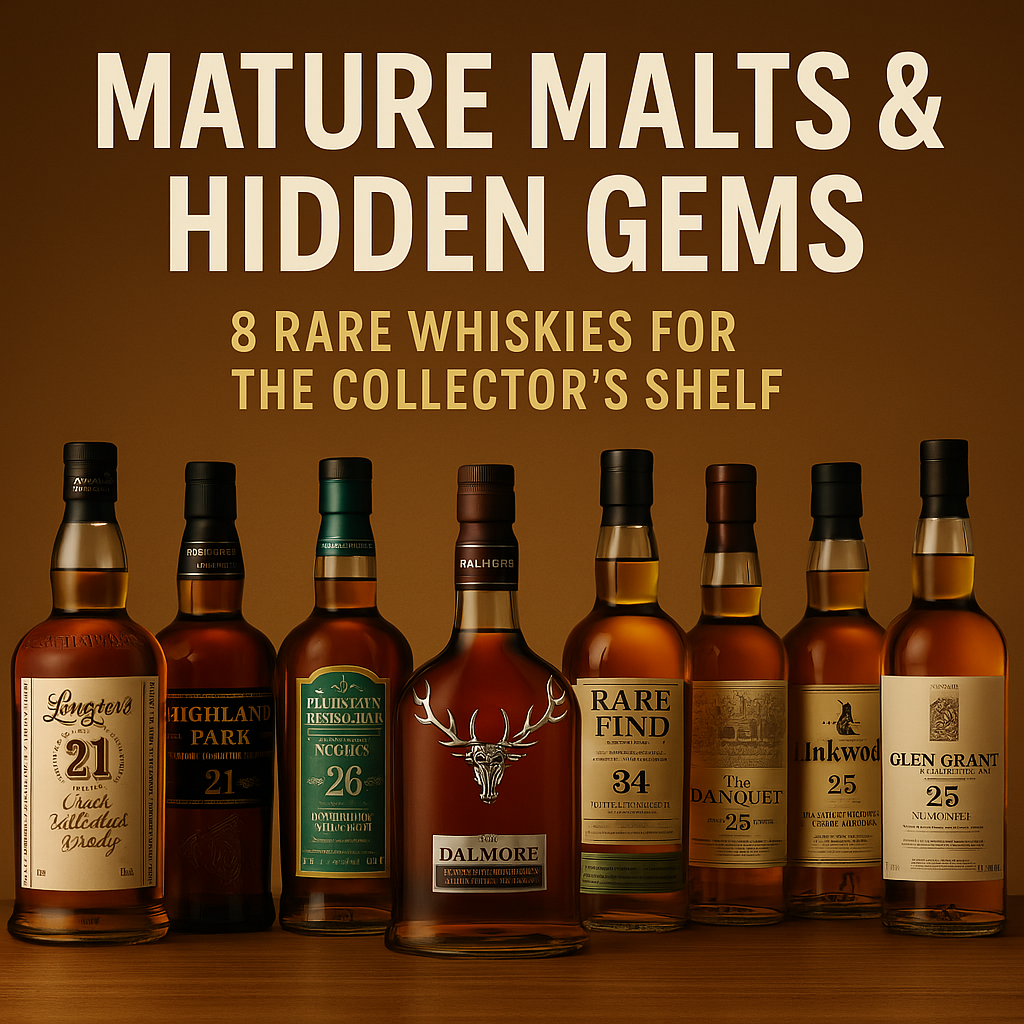
This guide explores eight collectible Scotch whiskies, from vintage Longrow and Highland Park to mature Linkwood, Glenrothes and an independently bottled 34-year-old blend.
These aren’t necessarily everyday purchases. Some are scarce, expensive or available only intermittently. But each has a story that makes it worth investigating.
Collector’s note: Catalogue listings do not guarantee current availability. Always confirm the exact bottling, price, provenance, bottle condition and seller details before purchasing. Rarity does not guarantee future resale value.
Quick Picks: 8 Rare Scotch Whiskies Worth Exploring
- Best historic Campbeltown bottling: Longrow 1974 21 Year Old Cask #1549.
- Best commemorative island malt: Highland Park 1977 21 Year Old Bicentenary.
- Best mature independent blend: Gleann Mór Rare Find 1989 34 Year Old.
- Best understated Speyside classic: Linkwood 25 Year Old Gordon & MacPhail.
- Best older sherry-cask discovery: Glenrothes 1992 31 Year Old Cask Masters.
- Best mature Highland single cask: Tomatin 1993 30 Year Old Gordon & MacPhail.
- Best limited Campbeltown release: Springbank 175th Anniversary 12 Year Old.
- Best mature modern Campbeltown malt: Glen Scotia 25 Year Old 2022 Release.
Rare Scotch Whiskies: Comparison Table
| Whisky | Age | Region / Style | Collector Appeal |
|---|---|---|---|
| Longrow 1974 Cask #1549 | 21 years | Campbeltown single malt | Historic vintage and identified cask |
| Highland Park 1977 Bicentenary | 21 years | Orkney single malt | Commemorative vintage release |
| Gleann Mór Rare Find 1989 | 34 years | Blended Scotch | Mature independent bottling |
| Linkwood 25 Gordon & MacPhail | 25 years | Speyside single malt | Independent bottler and mature distillery character |
| Glenrothes 1992 Cask #6048 | 31 years | Speyside single malt | Vintage, age and identified Oloroso cask |
| Tomatin 1993 Cask #6812 | 30 years | Highland single malt | Single-cask independent release |
| Springbank 175th Anniversary | 12 years | Campbeltown single malt | Anniversary release |
| Glen Scotia 25 2022 | 25 years | Campbeltown single malt | Mature, release-specific expression |
1. Longrow 1974 21 Year Old Cask #1549 – A Historic Campbeltown Discovery
Longrow 1974 21 Year Old Cask #1549 is one of the most historically interesting bottles in this selection.
Longrow is the peated whisky produced at Springbank Distillery in Campbeltown. Its early vintages are particularly interesting because they provide a glimpse into a different era of distilling.
This is not the modern Longrow 21 Year Old core expression. It is a specific 1974 vintage bottling, identified by cask number.
Why Collectors May Be Interested
- Historic 1974 distillation vintage.
- 21-year age statement.
- Identified cask number: 1549.
- Longrow’s connection to Springbank Distillery.
- Interest in older Campbeltown whisky production.
Flavour direction: Older peated Campbeltown whisky may show smoke, malt, oak and maritime character, but tasting notes for this exact cask should be verified separately.
Collector’s tip: Confirm the bottle label, cask number, fill level, closure and provenance before purchase.
Explore Longrow 1974 21 Year Old →
2. Highland Park 1977 21 Year Old Bicentenary – A Commemorative Orkney Malt
Highland Park 1977 21 Year Old Bicentenary offers a combination of age, vintage and commemorative significance.
Highland Park, based on Orkney, is associated with a distinctive balance of malt sweetness, oak and gentle peat character.
This particular bottle is a historic 1977 vintage bicentenary release, rather than the modern Highland Park 21 Year Old expression.
Why Collectors May Be Interested
- 1977 distillation vintage.
- 21-year age statement.
- Commemorative bicentenary bottling.
- Historic Highland Park distillery character.
- Appeal to collectors of older island single malts.
Flavour direction: Highland Park is often associated with honey, malt, spice and gentle peat. The exact profile of this historic release should be assessed using bottling-specific tasting notes.
Collector’s tip: Check the commemorative presentation and whether any original packaging is included.
Explore Highland Park 1977 Bicentenary →
3. Gleann Mór Rare Find 1989 34 Year Old – A Mature Independent Blend
Gleann Mór Rare Find 1989 34 Year Old is an interesting reminder that collectible Scotch isn’t limited to single malts.
Gleann Mór’s Rare Find range focuses on independently selected whiskies, and this expression offers an unusually mature example of blended Scotch.
A 34-year age statement means the youngest whisky in the blend has matured for at least 34 years.
Why Collectors May Be Interested
- 1989 vintage designation.
- 34-year age statement.
- Independent bottling.
- Mature blended Scotch rather than single malt.
- Potential appeal to collectors exploring overlooked whisky categories.
Flavour direction: Mature blended Scotch can develop layered oak, fruit, spice and sweetness, but the exact balance depends on the blend and cask history.
Collector’s tip: Verify the bottle’s precise ABV, release information and any available bottling details.
Explore Gleann Mór Rare Find 34 Year Old →
4. Linkwood 25 Year Old Gordon & MacPhail – Understated Speyside Elegance
Linkwood 25 Year Old Gordon & MacPhail Distillery Labels is a strong candidate for collectors who appreciate mature whisky from less heavily marketed distilleries.
Linkwood is a Speyside distillery whose spirit is often associated with elegant fruit and floral character.
Gordon & MacPhail has a long history as an independent bottler and whisky maturation specialist, making its releases particularly interesting for collectors exploring distillery character outside official bottlings.
Why Collectors May Be Interested
- 25-year age statement.
- Independent bottling by Gordon & MacPhail.
- Distillery Labels series.
- Linkwood’s understated reputation.
- Opportunity to explore mature Speyside whisky.
Flavour direction: Orchard fruit, floral notes, malt, spice and oak are useful style references, although exact notes depend on the bottling.
Collector’s tip: Confirm the label edition, bottling year and bottle condition.
Explore Linkwood 25 Year Old →
5. Glenrothes 1992 31 Year Old Oloroso Cask #6048 – A Mature Sherried Speyside Malt
Glenrothes 1992 31 Year Old Cask #6048 is a compelling example of the detail that can make an independent bottling interesting to collectors.
The listing identifies a 1992 vintage, 31 years of maturation, an Oloroso sherry cask and a specific cask number.
For enthusiasts of mature sherried Scotch, those details make it worth comparing with other vintage Glenrothes bottlings.
Why Collectors May Be Interested
- 1992 distillation vintage.
- 31-year age statement.
- Oloroso sherry cask.
- Identified cask number: 6048.
- Cask Masters bottling series.
Flavour direction: Oloroso sherry-cask maturation can contribute dried fruit, nuts, spice and oak, although the exact balance depends on the cask.
Collector’s tip: Verify the bottler, cask number, bottle count if stated and original presentation.
Explore Glenrothes 1992 31 Year Old →
6. Tomatin 1993 30 Year Old Cask #6812 – Mature Highland Whisky
Tomatin 1993 30 Year Old Cask #6812 is another independently bottled whisky with a clearly identified vintage and cask.
Released under Gordon & MacPhail’s Connoisseurs Choice label, it offers collectors an opportunity to explore a mature Highland single malt through an independent bottler’s selection.
Tomatin is often associated with fruity and malty spirit character, which can develop in different directions during long maturation.
Why Collectors May Be Interested
- 1993 vintage.
- 30-year age statement.
- Identified cask number: 6812.
- Gordon & MacPhail Connoisseurs Choice series.
- Mature Highland single malt.
Flavour direction: Mature fruit, malt, spice and oak are useful general references; check the exact cask’s tasting notes for more precision.
Collector’s tip: Check the label, cask information, ABV and bottling details against the seller’s photographs.
Explore Tomatin 1993 30 Year Old →
7. Springbank 175th Anniversary 12 Year Old – A Commemorative Campbeltown Release
Springbank 175th Anniversary 12 Year Old demonstrates why age isn’t the only factor that interests whisky collectors.
Springbank has a devoted following, and commemorative releases can attract interest because they mark a particular moment in a distillery’s history.
This bottle combines a 12-year age statement with an anniversary designation, making its release identity more significant than age alone.
Why Collectors May Be Interested
- 175th anniversary release.
- 12-year age statement.
- Springbank Distillery heritage.
- Distinctive Campbeltown identity.
- Commemorative bottling appeal.
Flavour direction: Springbank is commonly associated with malt, fruit, coastal notes and varying degrees of smoke, but exact release-specific notes should be checked.
Collector’s tip: Verify the precise edition and original packaging rather than relying only on the anniversary name.
Explore Springbank 175th Anniversary →
8. Glen Scotia 25 Year Old 2022 Release – Mature Campbeltown Character
Glen Scotia 25 Year Old 2022 Release is a mature Campbeltown single malt worth considering for collectors who appreciate age-statement whisky with a distinct regional identity.
Glen Scotia is one of Campbeltown’s established distilleries, producing malts that can combine fruit, oak, spice and maritime character.
This 2022 release offers a specific bottling reference for collectors comparing different editions of Glen Scotia 25.
Why Collectors May Be Interested
- 25-year age statement.
- Identified 2022 release.
- Campbeltown single malt.
- Mature distillery character.
- Potential interest in comparing release variations.
Flavour direction: Mature fruit, oak, spice and coastal character are useful style references, although release-specific tasting notes should be consulted.
Collector’s tip: Check that the seller’s bottle is the 2022 release and confirm presentation details.
Explore Glen Scotia 25 Year Old 2022 →
What Makes a Scotch Whisky Rare or Collectible?
Rarity and collectability are related, but they aren’t identical.
A whisky may be rare because few bottles were produced, because it was released decades ago or because surviving bottles are difficult to find.
Collectability also depends on whether buyers are interested in that specific whisky.
Historic Vintages
Older distillation vintages can provide insight into a distillery’s past production methods and maturation practices.
Longrow 1974 and Highland Park 1977 are examples of vintage-specific bottlings.
Independent Bottlings
Independent bottlers purchase or mature whisky and release it under their own labels.
They can offer expressions that differ from a distillery’s regular range, sometimes identifying a particular cask or vintage.
Gordon & MacPhail and Gleann Mór are examples represented in this guide.
Single-Cask Releases
Single-cask bottlings come from an individual cask rather than a marriage of multiple casks.
When a cask number is supplied, it can help collectors identify the exact release.
Commemorative Editions
Anniversary and special-edition bottlings may appeal to collectors interested in a distillery’s history.
However, commemorative branding alone doesn’t guarantee scarcity or strong resale demand.
Mature Age Statements
Whiskies aged for 25, 30 or more years can be distinctive because of their extended interaction with oak.
But age doesn’t automatically make a whisky rare, exceptional or valuable.
Independent Bottlers: Why They Matter to Collectors
Independent bottlers are an important part of Scotch whisky culture.
They may release whiskies from distilleries that rarely produce official single malts, select unusual casks or offer vintage expressions unavailable in standard ranges.
For collectors, the appeal can include:
- Specific distillation and bottling dates.
- Identified cask numbers.
- Unusual maturation histories.
- Distinctive bottling series.
- Opportunities to compare independent and official releases.
However, an independent bottling is not automatically better than an official release. The individual whisky and its provenance still matter.
How to Check a Rare Whisky Before Buying
For an expensive or historic bottle, verification is just as important as tasting notes.
1. Confirm the Exact Bottling
Check the distillery, vintage, age statement, cask number, bottler, ABV and bottle size.
Small differences can identify entirely different releases.
2. Examine the Bottle Condition
Look at the fill level, seal, closure, label condition and any visible signs of leakage or tampering.
3. Check the Packaging
Original boxes, tubes or presentation cases may matter to some collectors.
Confirm whether they are included and what condition they are in.
4. Ask About Provenance
For high-value bottles, seek clear information about the seller, ownership history and authenticity.
5. Compare Market Prices Carefully
Asking prices don’t necessarily represent completed sales.
Where possible, compare genuinely equivalent bottlings and consider fees, shipping, insurance and taxes.
6. Think About Your Purpose
If you’re buying to drink, flavour and personal enjoyment should be central.
If you’re buying to collect, exact edition details and bottle condition become particularly important.
Rare Whisky vs Old Whisky: What’s the Difference?
An old whisky has spent a stated number of years maturing in oak.
A rare whisky is one that is difficult to obtain, whether because of limited production, age, historic significance or other factors.
A 30-year-old whisky isn’t necessarily rarer than a commemorative 12-year-old bottling.
Equally, a rare whisky isn’t automatically more enjoyable than a widely available expression.
Collectors should assess age, rarity, demand and drinking quality separately.
Should You Open a Rare Whisky or Keep It Sealed?
There is no single right answer.
Some collectors enjoy preserving historic bottles, while others believe the greatest value of whisky lies in drinking and sharing it.
If you intend to open a rare bottle, consider recording its details and enjoying it on a meaningful occasion.
If you intend to preserve it, store it appropriately and monitor its condition.
Remember that whisky does not continue ageing in the bottle as it does in an oak cask.
How to Store Collectible Scotch Whisky
- Keep bottles upright: Unlike wine, spirits should generally not be stored with the liquid in prolonged contact with the cork.
- Avoid direct sunlight: Light can damage packaging and may affect the whisky over time.
- Maintain stable conditions: Avoid significant temperature fluctuations.
- Protect packaging: Keep boxes and labels clean and dry.
- Document purchases: Retain invoices, photographs and relevant provenance records.
- Inspect periodically: Check for leakage, closure problems or other changes.
Common Mistakes When Collecting Rare Whisky
- Confusing different editions: A historic vintage may have little in common with a modern release sharing the same age statement.
- Buying by age alone: Older doesn’t always mean better or rarer.
- Assuming every limited edition will appreciate: Collector demand can change.
- Ignoring provenance: Authenticity matters, especially for expensive bottles.
- Overlooking bottle condition: Fill level, seals and packaging can affect desirability.
- Relying on asking prices: Listed prices may not reflect actual transactions.
- Buying solely for investment: Whisky resale markets involve substantial uncertainty and costs.
Frequently Asked Questions About Rare Scotch Whisky
What makes a Scotch whisky rare?
Limited production, historic vintages, discontinued releases, unusual casks and surviving bottle numbers can all contribute to rarity.
Are older whiskies always more collectible?
No. Collector interest depends on many factors beyond age, including distillery reputation, release identity and condition.
What is an independent whisky bottler?
An independent bottler releases whisky under its own label, often identifying the source distillery, vintage or cask.
What is a single-cask Scotch whisky?
It is whisky bottled from an individual cask rather than a combination of multiple casks.
Is Longrow the same as Springbank?
Longrow is a peated whisky produced at Springbank Distillery, but it has its own identity and style.
Is Highland Park 1977 Bicentenary the same as Highland Park 21?
No. The 1977 Bicentenary bottling is a specific historic release and should not be confused with modern Highland Park 21 expressions.
Can blended Scotch be collectible?
Yes. Historic, mature and limited blended Scotch whiskies can attract collector interest.
Does whisky continue ageing in the bottle?
No. The age statement refers to maturation in oak before bottling.
How should rare whisky be stored?
Store bottles upright, away from direct sunlight, with reasonably stable temperatures and appropriate care for packaging.
Do rare whiskies always increase in value?
No. Prices can rise or fall, and resale costs and market demand create uncertainty.
What should I check before buying an expensive whisky?
Verify the exact bottling, provenance, authenticity, condition, current price and seller reputation.
Is a commemorative release automatically rare?
No. The number produced and surviving availability matter more than the commemorative label alone.
Are independent bottlings better than official bottlings?
Neither category is inherently better. Both can contain exceptional and ordinary whiskies.
Should I buy rare whisky to drink or collect?
That depends on your goals. For drinking, prioritise flavour and enjoyment; for collecting, focus more heavily on edition details, condition and provenance.
Explore More Whisky Guides on ModHaven
- Cask Strength Whisky – Explore higher-strength Scotch expressions.
- Sherried Whisky – Discover sherry-cask maturation and flavour.
- Browse Scotch Whisky – Compare bottles and current retailer listings.
Final Verdict: Rare Scotch Whiskies Worth Collecting
The most interesting rare Scotch whiskies often have more to offer than an impressive age statement.
Longrow 1974 and Highland Park 1977 Bicentenary stand out for their historic significance. Linkwood 25 and Gleann Mór Rare Find 34 demonstrate the appeal of independent bottlings.
For collectors interested in specific casks, Glenrothes 1992 and Tomatin 1993 offer detailed vintage and cask identities.
Meanwhile, Springbank 175th Anniversary and Glen Scotia 25 provide two different approaches to collectible Campbeltown whisky.
The best collection is one built around genuine interest in whisky, careful research and an appreciation of each bottle’s history—not simply its price.
Affiliate disclosure: ModHaven may earn a commission from qualifying purchases through retailer links, at no additional cost to you. Prices, availability and specifications may change. Collectible whisky values are unpredictable and no financial return is guaranteed. Alcohol is intended for adults of legal drinking age. Please drink responsibly.